Important information
This equipment is designed for water disinfection. Its use is for Industrial applications such as DI Water disinfection in Automotive and NON automotive plants, food packing, swimming pools/commercial, drinking water disinfection, hospitals, hotels and any places where the presence of bacteria is a concern.
The equipment, while sophisticated, has been designed for simple and easy operation. In keeping with this philosophy, this user manual has been written to simplify all steps in the procedures that follow.
The UV equipment will need to be maintained and will require replacement parts. We recommend that you only use CIL factory parts. Failure to use genuine parts may impact system performance and may void the warranty.
About UltraViolet (UV) Disinfection
“The inactivation of microorganisms by ultraviolet radiation is a physical process, relying on the photochemical changes brought about when far-UV radiation is absorbed by the genetic material of the cell (deoxyribonucleic acid, or DNA). The wavelengths for optimum effectiveness correspond, as expected, to the maximum absorption spectrum for nucleicacids, between 250 and 265 nanometers (nm)¹.”
How it works
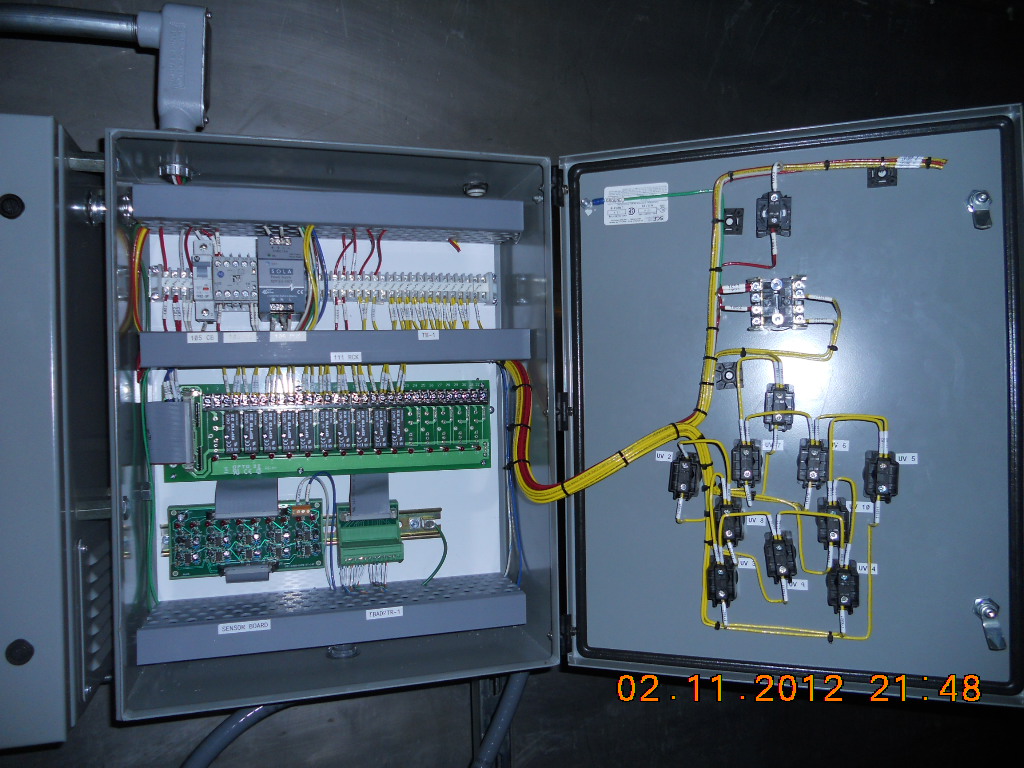
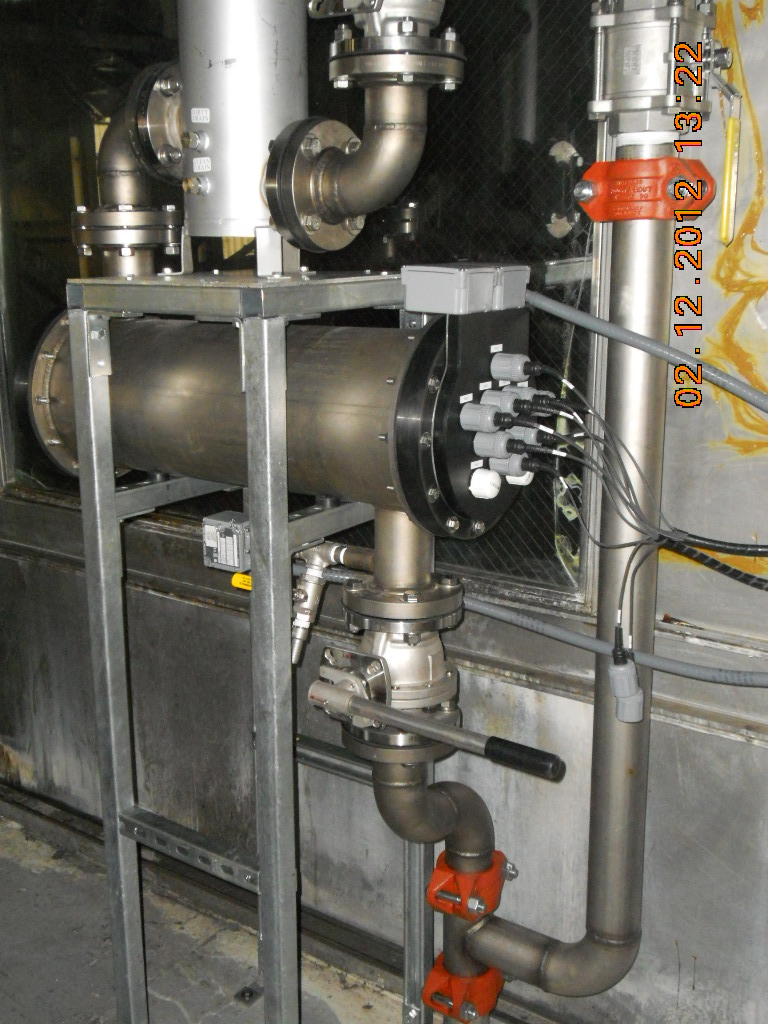
Circulating water enters the vessel (channel or chamber). Once inside, it is exposed to UV light. The UV lamp used for germicidal disinfection produces a portion of its light in the 254-nm wavelength. At this wavelength, UV light destroys bacteria, protozoa, viruses, molds, algae and other microbes. This includes fecal coliform and such waterborne diseases as:hepatitis, cholera, dysentery, typhoid fever, Bacillus sphaericus, E. coli B, E. coli K12 lambda, Proteus vulgaris , Pseudomonas aeruginosa, Salmonella typhimurium, Serratia marcescens, Staphylococcus aureus as well as many others.
The actual lamps are housed in quartz sleeves. These sleeves not only help maintain maximum operating temperature, but also prevent the lamps from coming in contact with the water.
While in the vessel, the wastewater is exposed to high doses of UV energy. Simply put, UV dose= lamp intensity multiplied by residence time. It is usually represented in microwatt seconds per square centimeter (mWs/cm²). Time is calculated as the hydraulic residence time in the UV system. The intensity is a function of the lamp type, the arrangement of lamps, and
the energy absorbing elements in the water that absorb or interfere with light before it reaches the targeted microorganism. The measurement of absorbing material is referred to as UV transmission (UVT).
This is expressed as a %. Most plants average 65%.
Since the UV disinfection process does not add chemicals or change the physical or chemical properties of the effluent, the circulated water is ready for filtering to remove contaminants when it leaves the UV chamber.
Advantages
There are many advantages to this type of disinfection: no need for toxic and expensive chemicals; fast treatment; low maintenance and simple and extremely low cost operation.
Applications
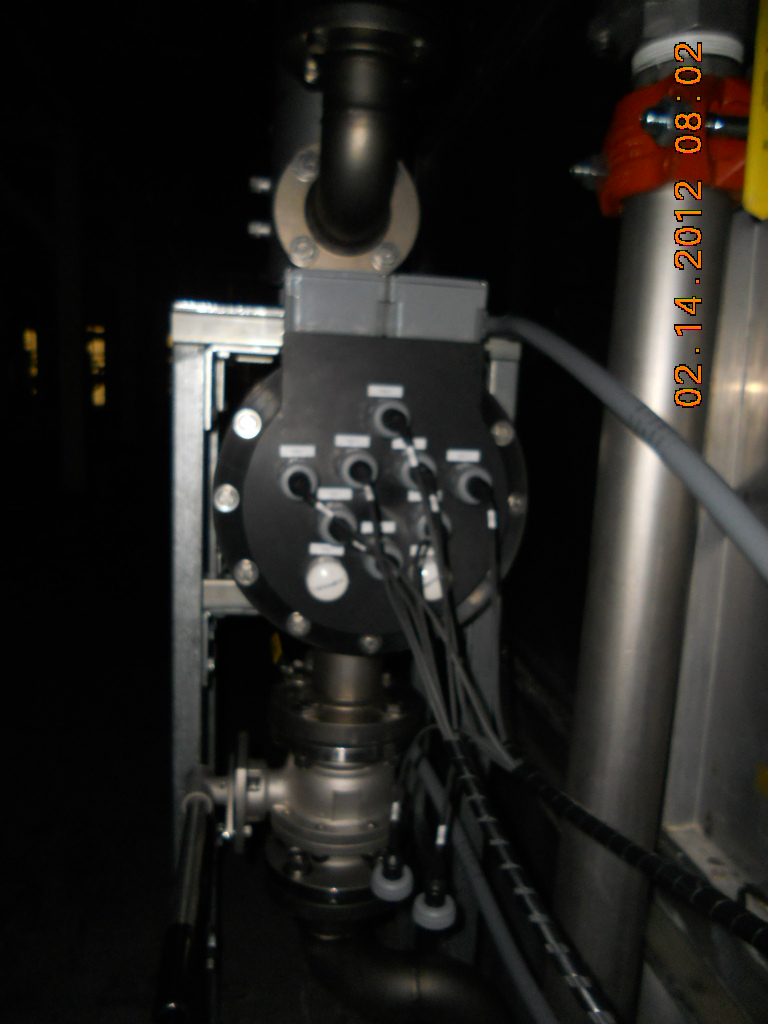
While UV disinfection is well-suited for wastewater treatment, it is important to monitor the quality and system performance.
One must look for situations that inhibit UV light form penetrating the water. Turbidity-the state of water when it is cloudy from having sediment stirred up-will interfere with the transmission of UV energy and decrease the disinfection efficiency. Total Suspended Solids (TSS) will also impact UV effectiveness. TSS numbers should be lower than 30 mg/L. If the application is for DI Water therefore the TSS should not be on issue.
In cases where the water has high iron or manganese content, is cloudy or has other organic or chemical impurities, it may be necessary to improve the pre-treatment process or increase the UV dosage. Once this has been addressed, UV disinfection will be effective in destroying microorganisms. Caroma also developed a system based on Ultrasound sensors to keep clean the quartz sleeves.